

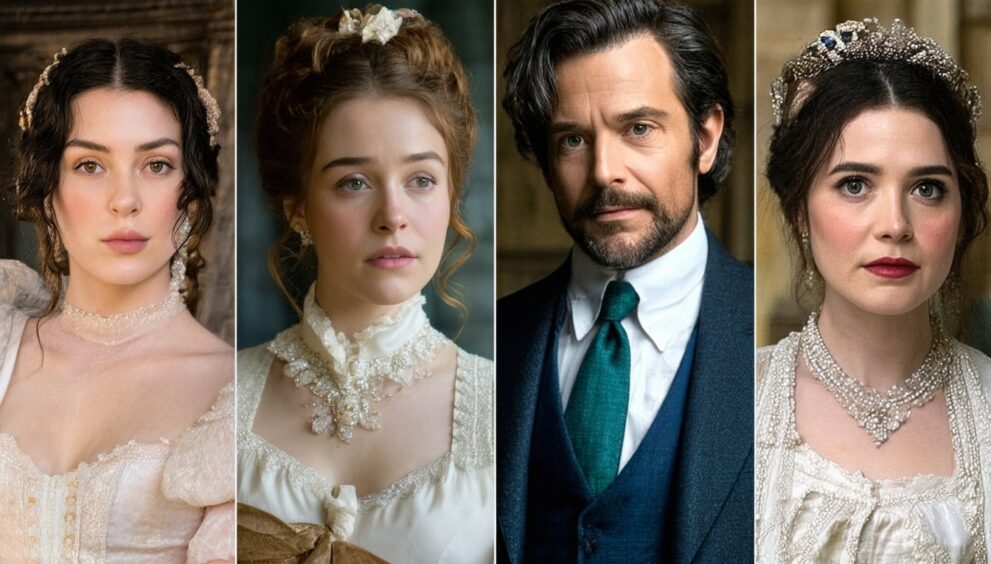
Set amidst the social upheavals and dazzling opulence of late 19th-century New York, HBO’s “The Gilded Age” has quickly made an impression with its compelling storytelling and richly detailed world. Much of the series’ acclaim, however, is owed to a deep, diverse cast bringing multi-layered characters to life—each reflecting the immense socioeconomic shifts of the era. From award-winning veterans to breakthrough newcomers, “The Gilded Age” cast stands as a masterclass in ensemble acting.
Main Cast Members and Their Characters
The core cast of “The Gilded Age” brings a nuanced variety to the screen, artfully embodying both the old and new powers of society. The interplay between historic families facing fading influence and ambitious outsiders challenging social order is critical to the show’s dynamic appeal.
Christine Baranski as Agnes van Rhijn
Christine Baranski, a legend of both stage and screen, delivers a towering performance as Agnes van Rhijn. The character, a widowed matriarch, embodies the “old money” class—steeped in tradition, status, and rigid rules.
Agnes is the moral and social compass of her family, fiercely protective of her legacy and skeptical of any encroachment by the newly wealthy. Baranski’s sharp wit and commanding presence continue her legacy of complex women, reminiscent of her roles in “The Good Wife” and “Mamma Mia!”
Cynthia Nixon as Ada Brook
Cynthia Nixon, well-known for her Emmy-winning role on “Sex and the City,” plays Ada Brook, Agnes van Rhijn’s gentler, more idealistic sister. Ada provides emotional warmth to the van Rhijn household, often caught in the tension between her loyalty to her sister and a more open outlook on change.
Nixon’s balance of vulnerability and inner strength gives Ada a quiet complexity, reinforcing the subtle generational shifts happening within the family.
Carrie Coon as Bertha Russell
A “new money” force, Bertha Russell is portrayed by Carrie Coon—an acclaimed actress recognized for her roles in “The Leftovers” and “Fargo.” Bertha is a self-made socialite and aspiring society queen, determined to break into New York’s upper crust.
Bertha’s arc is filled with both splendor and struggle. Coon’s ability to channel Bertha’s ambition, emotional intelligence, and calculated charm has made her one of the most compelling figures in the show.
“What sets ‘The Gilded Age’ apart is its willingness to let women drive the narrative, with Bertha Russell as a prime example of how ambition and empathy collide in period drama,” observes cultural critic Anne Thompson.
Morgan Spector as George Russell
Opposite Bertha is George Russell, played by Morgan Spector. As a railroad tycoon and the epitome of “robber baron” wealth, George showcases the era’s economic transformation. Spector balances ruthless business acumen with surprising tenderness for his family—a dynamic central to understanding the moral ambiguities of the period.
Louisa Jacobson as Marian Brook
Louisa Jacobson, daughter of Meryl Streep, steps into the role of Marian Brook, a young woman caught between two worlds. As the show’s audience surrogate, Marian’s journey—navigating her aunts’ expectations and her own modern desires—artistically highlights the era’s cultural evolution.
Her nuanced performance marks her as a breakout star, reflecting on issues of independence and societal change relevant even beyond the Gilded Age.
Denée Benton as Peggy Scott
Denée Benton brings depth to Peggy Scott, a Black writer and activist fighting prejudice and pursuing professional ambitions. Benton’s role situates “The Gilded Age” in a broader context, intricately exploring the period’s racial and gender issues.
Peggy’s determination and grace under pressure not only challenge the prevailing attitudes of her time but also open fresh narrative ground seldom explored in traditional historical dramas.
Key Supporting Players
Complementing the core cast, several notable performers round out the social tapestry of “The Gilded Age.” Each brings a distinct perspective on power, belonging, and ambition.
Taissa Farmiga as Gladys Russell
Taissa Farmiga plays Gladys, the sheltered but eager daughter of Bertha and George Russell. Her storyline—balancing her family’s aspirations with her own coming-of-age struggles—captivates those invested in the era’s generational rifts.
Blake Ritson as Oscar van Rhijn
Oscar van Rhijn, Agnes’s charming but secretive son, is portrayed by Blake Ritson. Oscar’s double life and hidden ambitions make him one of the show’s more enigmatic figures, offering insights into the hidden currents beneath the surface of genteel society.
Simon Jones as Bannister
Simon Jones lends gravitas to Bannister, Agnes’s unflappable butler. His measured, authoritative delivery nods to time-honored traditions of service. Bannister’s worldliness offers rare glimpses into the private realities of wealthy households.
Ensemble Strength and Recurring Faces
One of “The Gilded Age’s” greatest strengths is its ensemble, featuring a blend of American and British talent who bring authenticity and depth to even minor roles. Recurring actors such as Nathan Lane, Jeanne Tripplehorn, and Debra Monk appear throughout the series, each embodying socialites, power brokers, and household staff that help flesh out the series’ vibrant New York.
Notably, Julian Fellowes—the creator famed for “Downton Abbey”—has replicated his knack for creating a living, breathing world where no character feels cardboard thin. The attention to casting detail ensures every interaction contributes meaningfully to the show’s larger themes of ambition, adaptation, and identity.
The Importance of Casting in Period Dramas
Historical series like “The Gilded Age” must not only recreate visual authenticity but also convey the attitudes, speech, and interpersonal nuances of their time. A well-chosen cast grounds the spectacle in emotional truth.
Shows that succeed, such as “Downton Abbey” and “Bridgerton,” rely on casting that both honors tradition and seeks out fresh, underrepresented perspectives. “The Gilded Age” follows this lineage, with intentional diversity and a willingness to explore stories beyond the surface-level elite.
Conclusion: A New Chapter in Ensemble Storytelling
The cast of “The Gilded Age” delivers performances as lavish and layered as the era it depicts. Each actor brings more than period detail—they animate the era’s ambitions, anxieties, and transformations. As the series progresses, expect further exploration into the personal and societal dramas shaping the characters’ destinies.
Choosing the right actors for each role has proven pivotal for “The Gilded Age,” paving the way for both critical acclaim and renewed conversations about the power of ensemble-driven storytelling in historical television.
FAQs
Who are the lead actors in “The Gilded Age”?
Key leads include Christine Baranski (Agnes van Rhijn), Cynthia Nixon (Ada Brook), Carrie Coon (Bertha Russell), Morgan Spector (George Russell), Louisa Jacobson (Marian Brook), and Denée Benton (Peggy Scott).
Is “The Gilded Age” cast the same as “Downton Abbey”?
While “The Gilded Age” shares creator Julian Fellowes with “Downton Abbey,” its main cast is entirely different, featuring American and British actors, but no core returnees from the earlier series.
What role does diversity play in the cast?
The cast incorporates greater diversity than many comparable historical dramas, notably through Denée Benton’s portrayal of Peggy Scott, a trailblazing Black character navigating both race and gender barriers.
Are the characters in the show based on real people?
Characters in “The Gilded Age” are inspired by historical types and figures but are ultimately fictionalized to dramatize social, economic, and cultural themes of the era.
Which newcomer has received the most attention?
Louisa Jacobson’s performance as Marian Brook has attracted significant critical praise, marking her as a standout in a cast of established talents.
How does the supporting cast contribute to the series’ impact?
Supporting roles add texture and authenticity, portraying the full spectrum of society—from servants to socialites—and ensuring smaller storylines resonate alongside the central drama.