

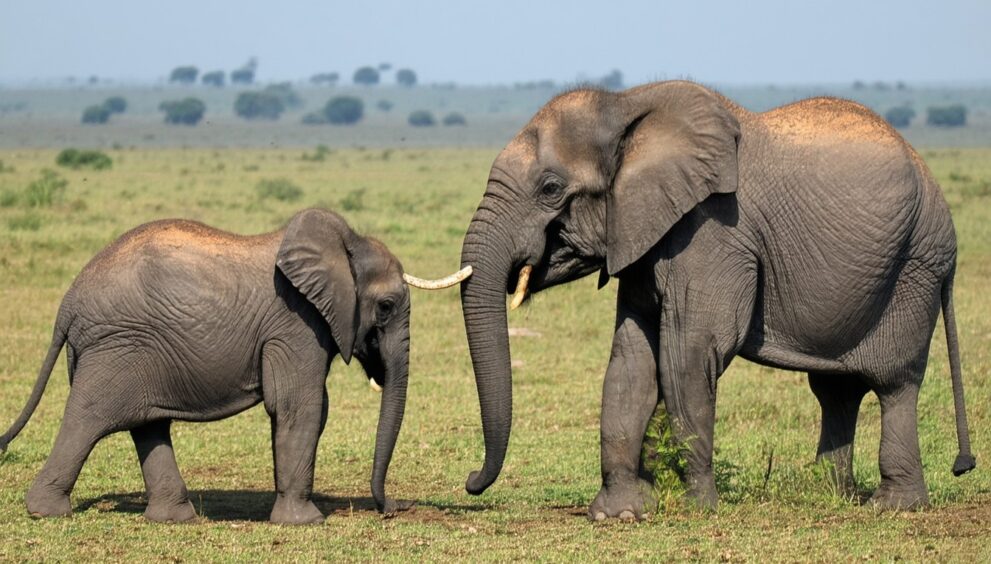
Elephants have long fascinated scientists and the public alike for their remarkable intelligence, social complexity, and apparent emotional depth. As one of the few non-human species to demonstrate self-recognition, sophisticated communication, and strong social bonds, elephants have earned a reputation as highly sentient beings. Recent studies continue to reveal the cognitive abilities of elephants, from their use of tools to their impressive memory for water sources and migration routes. At the intersection of animal cognition and human curiosity lies a new, lighthearted question: do elephants think humans are cute?
The notion of “cuteness” is culturally and biologically meaningful among humans but is rarely explored from the viewpoint of other animals. In approaching this question, it helps to first understand how elephants perceive the world and the ways in which they interpret beings outside their species.
How Elephants See and Recognize Humans
Sensory Perception in Elephants
Elephants rely on a mix of senses for navigation, survival, and social interaction. Their eyesight is moderate, but their sense of smell and hearing are both extraordinary. Research indicates that elephants can distinguish between different human ethnicities, ages, and even individual voices, often based on vocal cues and scent.
A study conducted in Kenya demonstrated that elephants reacted with caution or aggression to the scent or sound of Maasai men, who are known to spear elephants, but reacted calmly to the Kamba people, who pose less threat. This suggests that elephants do not merely see humans as a generic species; they fine-tune their perceptions according to prior experience and context.
Facial Recognition and Social Memory
One surprising area where elephants excel is in recognizing individuals—both elephant and human. Scientists from the University of Sussex found that captive elephants could differentiate between familiar and unfamiliar humans, responding more positively to friendly, known keepers and cautiously to strangers.
“Our research shows that elephants exhibit nuanced reactions to different humans, reflecting both recognition and emotional response,” said Dr. Lucy Bates, an elephant cognition researcher, highlighting the depth of elephant memory.
Memory plays a key role in these interactions, as elephants are able to remember positive or threatening encounters for many years. This capacity for individual recognition and emotional response forms a foundation for any discussion of whether elephants could see humans as “cute.”
Cuteness: A Human Perspective
What Makes Something “Cute”?
The human concept of cuteness—characterized by large eyes, round faces, and soft features—is grounded in the “baby schema” or Kindchenschema. These features trigger nurturing instincts in humans, influencing everything from pet selection to viral videos. The science of cuteness stems from evolutionary psychology, aimed at promoting care for infants.
However, animal cognition researchers caution against anthropomorphizing, or assuming animals interpret signals the same way that humans do. While dogs, for example, have evolved traits that humans perceive as cute, there’s no clear evidence that the concept of cuteness, as we understand it, holds meaning for other species—let alone elephants.
Do Elephants Express Preferences for Human Features?
Currently, there is no direct scientific evidence that elephants perceive humans through a “cuteness” lens akin to our own. Observations suggest that elephants can display curiosity or affection toward some people, particularly those they know and trust, but these reactions are typically rooted in familiarity and social context rather than physical appearance.
In sanctuaries and reserves, young elephants sometimes seek comfort from their caretakers, wrapping trunks around arms or leaning in for tactile reassurance. But such interactions are best interpreted as signs of trust and attachment, not of an aesthetic judgment like cuteness.
Elephant-Human Bonds: Attachment, Affection, or Attraction?
Trust and Social Relationships
Trust is a cornerstone of the most positive elephant-human interactions. Elephants raised in close proximity to humans, such as orphans in wildlife rehabilitation programs, often develop strong bonds with their keepers. These long-term relationships are built on routine, familiarity, and the consistent provision of care.
In stories from the David Sheldrick Wildlife Trust, juvenile elephants have been seen greeting caretakers with exuberance, vocal rumbles, and trunk hugs. Many handlers report that individual elephants vary widely in temperament and social preference, just as people do. Yet, these relationships are more likely a function of mutual trust and positive reinforcement rather than an appreciation of human “cuteness.”
Interpreting Elephant Behavior
Elephants can be playful, gentle, or occasionally mischievous around their favorite humans, but researchers caution against reading overt affection as evidence that elephants find humans cute. Unlike dogs, whose breeding history is closely tied to human social cues and preferences, elephants are wild animals with different social priorities and evolutionary pressures.
“To assign human concepts like ‘cuteness’ to elephants risks misunderstanding their true nature, which is deeply social but informed by their own sensory world,” notes Dr. Joyce Poole, a leading elephant ethologist. “Their responses reflect intelligence and empathy, not an aesthetic preference.”
Science’s Limits and Ethical Considerations
The Limits of Interpretation
For those hoping that elephants view us as cute or endearing, the current science offers little direct support. Elephants are clearly capable of forming deep bonds with certain humans, but these attachments stem from shared experiences, not necessarily from physical appearance.
Attempting to measure an elephant’s perception of human beings using human emotional frameworks can inadvertently obscure or distort the animals’ genuine cognitive processes. Elephant minds are uniquely adapted to their environmental and social challenges; a sense of “cute” simply may not exist in their behavioral repertoire.
Conservation and Human Responsibility
Beyond questions of cuteness, understanding how elephants perceive and interact with humans has vital conservation implications. As habitat loss and human-elephant conflict intensify, fostering empathy and respect for elephant intelligence—and their boundaries—is critical. Recognizing elephants for their complex minds, independent of how they might see us, is a necessary step toward ethical coexistence.
Conclusion
While the idea that elephants think humans are cute captures the imagination, research indicates that elephants’ relationships with humans center on memory, trust, and individual recognition, not on human standards of attractiveness or cuteness. Anthropomorphizing wild species can lead to misunderstandings, but respecting their intelligence and emotional lives brings us closer to meaningful coexistence. In practice, the bonds between elephants and people are built on mutual respect—something far richer than cuteness alone.
FAQs
Do elephants recognize individual humans?
Yes, studies suggest elephants can recognize individual humans by voice, scent, and facial features, especially those they encounter regularly or who care for them.
Why do some elephants seem affectionate towards humans?
Elephants often form bonds with familiar people, particularly caregivers, based on repeated positive interactions, trust, and social learning rather than any perception of “cuteness.”
Is it possible that elephants find baby humans cute?
There is no scientific evidence that elephants interpret human infants as “cute” in the way humans do. Their reactions are more likely driven by curiosity or familiarity with the presence of young.
Can elephants differentiate between friendly and threatening humans?
Yes, research has shown that elephants react differently to people depending on prior experiences, individual behavior, and local culture, sometimes even distinguishing between different groups by clothing, scent, or language.
Do any other animals perceive humans as cute?
Some domesticated animals, particularly dogs, may respond positively to human infant-like features, but this is the result of thousands of years of domestication and selective breeding rather than a universal animal trait.
What is the benefit of studying elephant perception of humans?
Understanding how elephants perceive people helps improve human-elephant relationships, informs conservation strategies, and reduces the risk of conflict, ultimately benefiting both species.